Michael D. Rubin & Associates: Full-Service Nonprofit Consulting, Fundraising & Coaching Firm
Our associates have more than 100 years of combined nonprofit fundraising expertise, bringing impactful and measurable client solutions.
Studies
Planning
Building
Research
Writing
Development
Coaching
Analytics


Our strategic and collaborative philanthropic counsel has impacted non-profits across a variety of disciplines.


What our clients are saying

The Challenges of Fundraising
One of the central topics we discussed was the immense pressure on fundraising professionals.
Many times, these dedicated individuals are set up for failure, tasked with unrealistic goals such as raising a substantial percentage of a pre-set budget without adequate support. It's an unreasonable expectation which often leads to frustration and high turnover rates.
For example, Diana pointed out that the average tenure of a fundraising professional pre-COVID was just 18 months—a fact that underscores the need for strong organizational backing and strategic planning.
While discussing this, I emphasized the importance of shifting from aggressive and often uncoordinated fundraising efforts to more strategic and positive approaches. Fundraising shouldn't just be about reaching financial goals; it's about joyful connections with donors and fulfilling the organization’s mission.
By rethinking strategies, organizations can foster more sustainable and effective fundraising environments.
The Role of Coaching in Personal and Professional Growth
As a certified coach, I can't stress enough the value of coaching in both personal and professional development. Coaching is not about simply offering advice. It's about facilitating discovery and empowering individuals to set and achieve their own goals. I often use the acronym TAABS—Takeaways, Action, Accountability, Barriers, and Sources/Resources—to help guide my clients through the coaching process.
During the episode, I shared that one of my motivations for becoming a certified coach was to provide tangible, disciplined support to my clients. This certification sets me apart in the crowded field of coaching, which has over 26,000 accredited professionals worldwide. The rigorous process made me realize the vast potential coaching holds—not just for nonprofit sectors but various facets of life.
Differentiating Coaching from Therapy
An essential distinction I highlighted is the difference between coaching and therapy. Coaching is inherently forward-looking and positive, whereas therapy often delves into experiences to address psychological issues.
Coaches need to recognize when to refer clients to medical, psychological, or legal professionals. It's all about ensuring that clients get the right kind of support they need.
Building Long-Term, Trust-Based Coaching Relationships
One of the unique aspects of effective coaching is the development of long-term, trusted partnerships. As sessions progress, clients often uncover deeper issues that weren't initially apparent, which can be profoundly beneficial for their development.
I shared a personal experience of having my own coach since 2018, which has significantly aided my business goals.
Practical Applications and Success Stories
We also discussed specific scenarios where coaching has made a tangible difference. For example, I helped a director of development transition smoothly into an executive role, provided accountability to a seasoned fundraiser, and guided a new director of development unfamiliar with fundraising aspects. One memorable success story involved organizing a swift virtual event that raised $10,000—proof that new approaches and insightful questions can yield phenomenal results.
Listen & Subscribe
Diana Marquis’ monthly About Fundraising Podcast provides information and experiences from different points of view to help you move your organization forward, deal with difficult situations, and recognize that you aren't alone in your efforts to better serve your community.
Listen to Diana’s full interview with me, and be sure to subscribe to her show (this link will take you to your favorite podcast platform).
Ready to Get Started?
If you want to explore how coaching can unlock your potential or tackle fundraising challenges head-on, I offer a free hour of consultation to help you understand if coaching is the right fit for you. Feel free to reach out via email at michael@mdrubin.com or visit my coaching page for more information.

See the entire Sophisticated Giving issue here
Some nonprofits are sharing blunt messages about financial woes in an effort to spur donations.
By Emily Haynes
December 11, 2023
philanthropy.com
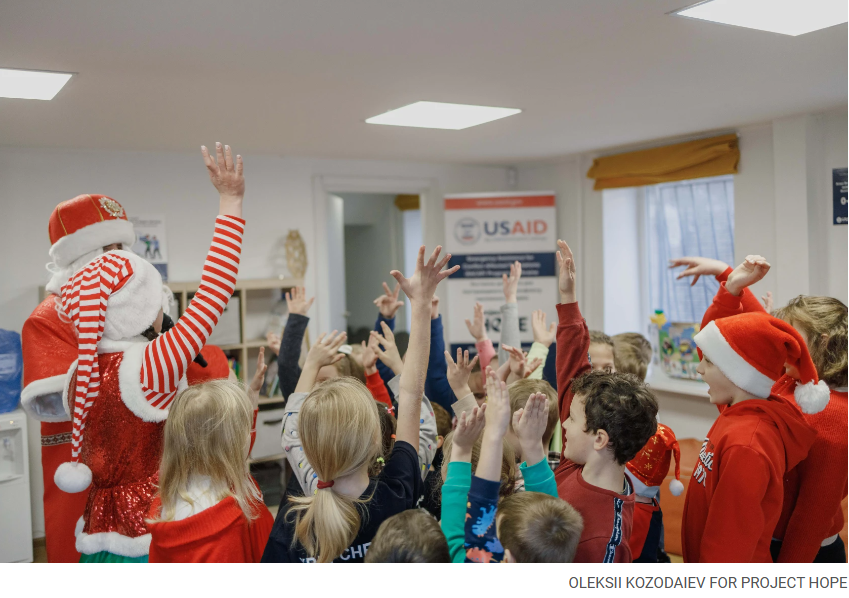
Children celebrate St. Nicolas Day in Dnipro, Ukraine, on Dec. 5, as part of a program partly funded by nonprofit Project HOPE. The group is appealing to supporters with donor-advised funds in its year-end campaign.
Nonprofit fundraisers are now in the thick of the all-important year-end fundraising period, when many groups raise the bulk of their annual revenue. After an unimpressive fundraising finish last year, charities are hoping for a better outcome this year.
But the calendar year’s final fundraising push comes on the heels of a lackluster GivingTuesday, where donor participation fell 10 percent and total giving stayed flat at $3.1 billion. But that outcome doesn’t mean year-end giving will also be flat, according to Laura MacDonald, principal at Benefactor Group, a fundraising consulting firm.
“I don’t think it’s a good indication of the sentiment of high-net-worth donors,” she says. That’s because GivingTuesday typically appeals to donors giving small sums. Major donors, she says, are generally more responsive to the highs and lows of the stock market, giving more when the market soars and giving less when it falters.
However, the decline in participation seen on GivingTuesday worries MacDonald. While it’s not yet clear why fewer donors joined in this year, she says it’s “continued evidence of the troubling trend that we’ve been seeing for a while, which is the declining rate of participation in charitable giving in America.”
With the loss of these everyday givers, high-net-worth donors have been powering donations in recent years. This year-end, these big donors are expressing more confidence in giving than they did last year, says Chris Collins, director of national philanthropy at Genesys Works, a nonprofit that places high schoolers in paid corporate internships. That could be due to improved stock market performance and the fact that a full-blown recession never materialized in 2023, he says.
“There’s just a little bit more of a sense of optimism,” he says, “and maybe more of a willingness to make larger philanthropic investments.”
In a bid to make this year-end better than the last, fundraisers are shaking things up by appealing for gifts via donor-advised funds and making their budget needs plain to donors.
All Eyes on DAF Contributions
At Project HOPE, an international-aid nonprofit, fundraisers are encouraging donors to consider making contributions from their donor-advised funds this year. The charity is running a social media campaign asking donors, “Have you done a health check on your DAF lately?” Fundraisers will also discuss gifts from donor-advised funds when they talk to donors at year-end. Direct mail and email marketing will also mention these gifts.
The nonprofit raises roughly 40 percent of its revenue in the last two months of the year, according to Cinira Baldi, its chief development and communications officer.
“It’s really critical that people understand that we rely on their donation preemptively, before the emergency even occurs, so that we can respond quickly,” she says. “Having funding that is not available because it’s tied up in DAFs really creates constraints for any of the NGOs who are responding to the urgent [crises] around the world.”
Project HOPE is making this appeal as more donors are choosing to put their money in donor-advised funds. In 2021, giving to donor-advised funds outpaced giving to private foundations, according to the Institute for Policy Studies research project, Inequality.org.
Baldi says Project HOPE earned $3.5 million in fundraising revenue from contributions via donor-advised funds last year.
Given the popularity of donor-advised funds, Baldi says it’s tricky to make the pitch to donors to disburse money out of them — not just put money into them. “It’s a fine line. You don’t want donors to ever feel like what they’re doing with their money is not smart,” she says. The charity’s campaign focuses on boosting donors’ awareness of how they can be involved in giving from their DAFs, with the hope that the knowledge will inspire them to make a contribution.
Collins at Genesys Works says this year he has tried to build relationships with community foundations in the seven regions where his nonprofit operates. “We’ve found the sweet spot is just being on the radar of community foundations and [DAF] providers,” he says. That way if a DAF holder expresses an interest in making a grant toward workforce development, the community foundation can point them toward Genesys Works.
Donor-advised fund contributions to Year Up, a nonprofit that provides career training and mentorship for low-income young adults, have quadrupled since 2020, according to Susan Murray, its national director of corporate engagement, development, and revenue operations. While gifts from DAFs are notoriously hard to trace, Murray’s team does “very unsexy operational work” to uncover the donors behind those gifts, as long as they haven’t asked to be anonymous.
If fundraisers know a donor has previously given through a certain DAF provider, for example, they might confirm with the donor that a recent check from that provider was from their fund. Some checks from DAF providers will give the name of the donors who opened the funds. Others will include cover letters identifying the donor and requesting a report on how the gift was used. When checks contain no donor information at all, fundraisers will sometimes ask the fund’s sponsor whether the donor wanted to share more information about themselves so that they could receive a thank-you note or other communication. While Murray says this doesn’t always yield more information on the donor, it sometimes does.
“At least we tried,” she says. “We don’t want someone to give to us, and we don’t say thank you, and they wanted us to — a fundraiser’s worst nightmare.”
Appeals Get Real
Some nonprofits aren’t sugar coating their budget needs this year-end, in hopes of encouraging donors to open their pocketbooks. YES!, a nonprofit media organization that publishes stories about solutions to big issues, notified supporters on October 12 that it was letting go of five staff members and cutting its budget by a quarter.
“We’ve experienced a double hit with declines in individual donations, and in print subscriptions (a trend that started a decade ago and accelerated last year), which together make up 60% of our revenue,” reads an email signed by the organization’s senior leaders.
The magazine announced a year-end fundraising goal of $350,000.
Vermont local nonprofit news site VTDigger also noted its tough financial situation this year-end. The nonprofit’s resources were strained in July when it produced round-the-clock coverage of severe flooding throughout the state. The rising waters also damaged the outlet’s office in Montpelier — which experienced some of the worst flooding — and forced the newsroom to relocate.
“We want to be direct: Due to a number of factors, 2023 was a difficult financial year for us, and we need help to continue the level of coverage you’ve come to expect from VTDigger,” Chief Operating Officer Sky Barsch wrote in a November 14 email to readers. The nonprofit hopes to raise $550,000 to advance its journalism.
One reason some nonprofits are getting more candid could be the declining rates of mid-level giving, says fundraising consultant Michael Rubin. With fewer donors giving overall, nonprofits are trying to hit home the difference everyday donors can make.
“In general, I always think transparency is a good thing, as long as you’re not complaining to people that you don’t know how to run a good organization,” Rubin says. “Because I don’t think that that resonates very well with donors.”
Appeals that emphasize the impact a nonprofit makes are typically most compelling, according to Rubin. As an example, he points to public radio’s shift in tone from almost desperate appeals to help stations stay on the air 10 or 20 years ago to today’s more sophisticated pledge drives that emphasize how donors benefit from the organization’s coverage.
“Donors want to be associated with successful organizations,” he says, “however you define that.”
From The Chronicle of Philanthropy
By Emily Haynes
January 12, 2021

Mennonite Economic Development Associates, an international aid charity, considered putting its long-planned fundraising campaign on ice but decided to forge ahead after talking to past donors.
In the early months of the pandemic, some fundraisers wondered whether it would be better to put their major campaigns on ice. That was the case at Mennonite Economic Development Associates, an international aid charity, which was preparing its biggest ever fundraising drive — aiming to surpass the five-year, $50 million campaign that concluded ahead of schedule last year — when Covid-19 struck. Fundraisers began 2020 outlining the focus of their upcoming campaign, scrutinizing their database for likely donors, and making a strategy to launch it quietly in July 2021.
The charity was counting on major donors to jump-start the campaign with gifts of $100,000 or more. Would donors still give big after so much economic and societal upheaval?
To find out, fundraisers got in touch with past donors. Those casual conversations were illuminating, says Ruth Leaman, senior development officer.
“Some people are really struggling. They’re just keeping their head above water,” Leaman says. “But others, their businesses are doing fantastic. They’re sitting on a lot of financial resources, and they want to be a part of our solution.”
The conversations, which did not include a fundraising ask, gave Leaman and her colleagues the confidence to forge ahead.
Recent years have seen a glut of campaigns reaching for higher and higher fundraising goals. But last year, early stock-market volatility and the sprawling public-health crisis shook some fundraisers’ confidence. Ten months into the pandemic, many are buoyed by the stock market’s recovery. Those financial gains have eased their compunction about running campaigns amid so much uncertainty.
Yet while many campaigns are still moving forward, they look different now. The pandemic has led to changes in campaign timelines, fundraising priorities, and, of course, how fundraisers ask for the major gifts that are critical to helping nonprofits reach ambitious goals. Experts believe some of those changes may stick around in the years to come.
Continued Support From Big Donors
A typical campaign will tap around 10 percent of a charity’s donor roll to contribute 90 percent of donations. And while some fundraisers had hoped more campaigns would focus on midlevel donors, the uneven recovery from the pandemic-induced economic recession has likely increased the focus on the biggest of big donors.
Stocks have rallied in response to good news on vaccine development and a close partisan margin in Congress that may stave off major tax-law changes. That’s a boon for big donors’ investment portfolios and one reason fundraising consultants think it’s safe for campaigns to continue — albeit cautiously.
Donors typically make giving decisions based on how they feel about their finances, says Gail Perry, president of the consultancy Fired Up Fundraising. While it’s impossible to know just how long or how difficult the road to the end of the pandemic will be, Perry says the action on Wall Street can elucidate how donors are feeling along the way.
“We continue to be very encouraged by the stock market as a bellwether and as a guide to donors feeling like they have extra capital to give away,” Perry says.
This sense of financial security is encouraging to fundraisers who are gaming out whether their organization has the support it needs to launch a campaign. In pre-campaign interviews throughout the pandemic, major donors have continued to pledge their support to nonprofits — despite widespread uncertainty about the future, says Kathryn Gamble, vice president at Fired Up Fundraising.
Far from crying that the sky is falling, Gamble says, “they’re still thinking about giving.”
‘You’ve Got to Fight for It’
Although the economic outlook seems brighter for the wealthiest donors, some fundraisers have struggled to win financial commitments during this uncertain time.
“Uncertainty is the enemy of successful fundraising,” says consultant Michael Rubin. “You have to put yourself in the shoes of the donor, and if the donor is unsure about things, they’re not going to make a big commitment.”
Case in point is a potential donor to the Owensboro Museum of Fine Art. Rubin says the donor told fundraisers there over Zoom that he couldn’t commit to making a gift to the campaign until 2021 because the pandemic had so upended his business. The chair of the Kentucky museum’s board was in a similar tight spot.
The museum’s fundraisers began the $2 million campaign’s “quiet phase” in August 2019, soliciting major donations from close supporters. But fundraisers were reticent to make broad appeals for contributions during the health crisis. “They felt it was a little insensitive to be asking,” Rubin says. At first, that made sense to him, too. But as time moved on, he worked to make the case that they should proceed with their fundraising. “This is your cause,” he told them. “You’ve got to believe in it, and you’ve got to fight for it, and you’ll just have to be more creative about the ways we get in front of people.”
Nonprofits owe it to their supporters to keep in touch even when times are tough, Rubin says. In September, he heard an NPR story about the low unemployment rate in Owensboro and shared the article with museum fundraisers to encourage them to keep their campaign moving. “We definitely pushed them,” he says.
Fundraisers need to let go of the idea that a campaign will look the same as it would have before the pandemic, Rubin says. Video calls are now commonplace in both work and family life, and Rubin encouraged the museum’s fundraisers to use them to ask donors to give to the campaign. He’s joined museum fundraisers for two appeals by Zoom and says the donors were comfortable with the medium.
Leaman, at Mennonite Economic Development Associates, worries that there are limits to how much fundraisers can solicit over a video call. “There’s no precedent for asking someone for a million dollars online,” she says. “It just does not happen in our industry.”
During the pandemic, Leaman has invited donors who live within a 90-minute drive from her home in Lancaster, Pa., on socially distanced walks or outdoor visits. Many donors are tired of virtual communication and are grateful for an in-person meeting, she says.
On another occasion, Leaman asked a potential campaign donor if she could host a webinar from the deck of his home. He agreed, and Leaman invited two other potential donors to join. During the webinar, Leaman interviewed the organization’s employees working on the ground in Nigeria, Tanzania, and Ukraine. That special access was meaningful to the supporters present, she says. “They felt like they were insiders on this experience.”
Cutting Out the ‘Fluff’
For nonprofits that were further along in their campaigns, the public-health emergency forced them to make major changes to their event strategy. Campaigns typically use in-person gatherings, such as cocktail parties at supporters’ homes and frequent meetings of campaign volunteers, to build excitement about their campaign goal and forge ties with big donors.
When the University of La Verne sent students home on March 13, its president and fundraisers scrambled to figure out what social distancing and remote learning meant for the university’s biggest campaign to date — a $125 million comprehensive drive, then in its penultimate year.
By the start of March, the university had raised over $118 million. But fundraisers worried the pandemic could halt the campaign’s momentum.
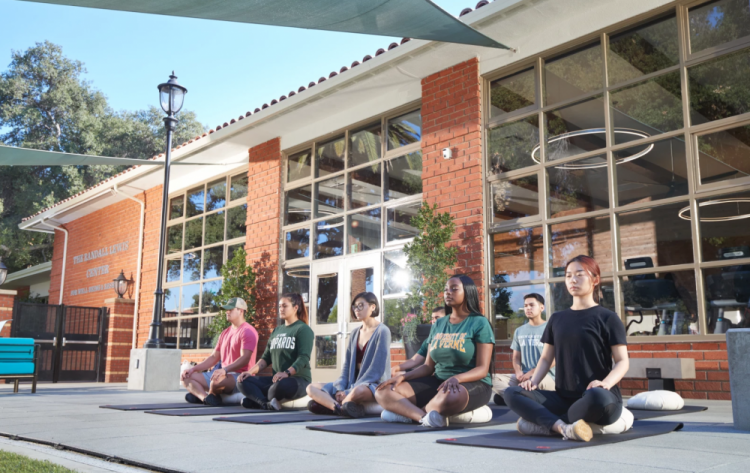
University of La Verne was in the midst of a major campaign when the pandemic struck.
“We met immediately and said, ‘Oh, my gosh. We’re still in this campaign. We cannot slow down,’” recalls Devorah Lieberman, president of the private California university. “We said, ‘Other institutions are probably slowing down, pulling back. We cannot do that. We have to find ways around that.’”
Fundraisers began calling donors and asking for contributions to the university’s new emergency fund to help students cover tuition, rent, flights home, and other urgent needs. In short order, they raised $300,000 to provide small grants to 900 students. The university counted that unanticipated influx of cash toward its campaign goal.
Such shifts in fundraising priorities are a way for an institution to demonstrate its short- and long-term visions, says Perry, the consultant.
“You’ve got to show that you’re relevant,” she says. “You’re not in this little ivory tower raising money for new buildings. You’ve got to respond to the work at hand.”
Lieberman saw a need to keep supporters close at a time when social-distancing measures forced them apart. “You cannot quarantine community” became fundraisers’ motto, she says. Since March, Lieberman estimates she has had at least 10 virtual coffees a week and roughly 120virtual meals with supporters of the university.
She sends a pound of coffee before the chats. And the university arranges for virtual dinner guests to receive their favorite dish from a local restaurant the evening of the dinner. Lieberman joins guests on the other end of the video call for conversation, usually with a bowl of yogurt and fruit.
The University of La Verne took its annual scholarship auction virtual, too — raising $600,000. “Because we didn’t have to spend money on a location and food and a take-home gift and a photographer and all of that, we ended up having more net revenue than if we’d rented a place and had a face-to-face gala,” Lieberman says.
Continued online appeals and engagement helped the university exceed its campaign goal by $3 million, wrapping up the fundraising drive in June — a year ahead of schedule.
Perry and Gamble say the pandemic has forced nonprofits to zero in on their campaign goal and strip away what they call “the fluff” — the coffees, lunches, and cocktail parties, where fundraisers would try to build excitement about a campaign. The switch to virtual events showed fundraisers that there was fat to trim, she says. Without those smaller events, fundraisers have kept their eyes on the prize: relationships with donors and volunteers.
“We’re really focusing on absolutely what’s important, and that is the relationships that our clients are building,” Gamble says. “We’re not focusing on, Did we get that last event executed? Was the coffee hot enough?”
Virtual Excitement
Nonprofits have had to rely on trial and error to learn what kinds of online activities resonate with their supporters.
Before Covid-19 shut down normal operations in March, fundraisers at the Columbus College of Art & Design had planned to use small in-person events to fine-tune the campaign theme in the lead-up to its launch. They considered putting the campaign on hold altogether, but ultimately fundraisers decided they could expect enough financial support to raise $20 million for scholarships, renovating and constructing campus buildings, and other programs for students and faculty.
“We couldn’t just sit here and hope that things would get better soon,” says Erika Gable, associate vice president for development.
In place of the planned in-person cocktail parties, Gable and her colleagues designed a program of virtual salons. The guest list for each salon was limited to 12 to 15 people, typically supporters such as board members or local business leaders. The goal was to create a feeling of “a cool kids get-together,” Gable says.
Throughout the fall, 65 people attended a total of six virtual salons, during which a faculty member and a trustee would discuss a hot topic in the art and design world. The carefully scheduled program also acted as a kind of focus group. Fundraisers were able to test out the campaign goals and messages in breakout rooms, where three or four guests would provide feedback. Each attendee received a thank-you gift, such as a house plant from a store owned by an alum, and a notebook and handwritten note.
Afterward, fundraisers emailed all attendees a survey about their experience. Those surveys and the fact that all salons were recorded meant fundraisers amassed useful data to help them hone their campaign message.
“The downside was that you miss a little bit of the stickiness of that relationship,” says Melanie Corn, the college’s president. “When you’re able to sit face-to-face with somebody in a cocktail party, you can maybe build that bond better.”
But Gable says the pandemic has fundamentally changed the kinds of conversations fundraisers and donors have. “It’s gotten more direct, and it’s gotten more complicated,” she says. “The silver lining to the pandemic is you have an automatic good reason to reach out to people.”
Although most donors who typically make big gifts can still do so, Gable says the uncertain economic and political future may cause them to structure their commitments differently. A donor may want to make a bigger gift now, before a potential change to the tax code, for example. Older donors may also choose to make a bigger, immediate gift rather than a multi-year pledge so they can see first-hand how their donations benefit a cause.
“It’s been more of the financial advisory kind of discussions,” Gable says of her recent conversations with donors. She thinks those direct conversations might stick around even after the pandemic ends.
Being more clear about your intentions with a donor — cutting to the chase and saying, “I’m reaching out to you because of X” — can help fundraisers “really be thoughtful with our work instead of just having good meetings,” she says.
Part of the college’s campaign is aimed at raising money to build a new building to house collaborative studio space, fabrication labs, classrooms, and extra-curricular student activities. A brick-and-mortar campaign isn’t an easy task in the best of times, and Corn says her team has worked hard to come up with fresh ways to make the ask. Classes at the college are currently remote, and fundraisers have tried to pre-empt questions about giving to a new building while students aren’t on campus.
Corn and her team hope donors understand that students at the college will not be learning remotely forever. “This is a short-term blip,” Corn says. “A building is forever. The core of our education is really about that on-campus experience. That’s not going to change.”
Shifting Timelines
The pandemic is forcing fundraisers to rethink not only how they come together with donors but also how they develop campaign strategies and timelines, says fundraising consultant Lynne Wester.
Many of her nonprofit clients are planning in two-week or monthlong increments instead of the nine-month or yearlong timelines they might have used in the past, she says. By breaking the campaign planning process into smaller segments, fundraisers can more easily change course if the future turns out to look different than they had anticipated, she adds.
It also helps fundraisers from getting “hung up in decision making and deliberation,” Wester says. “They must make a decision and move forward.”
Campaign lengths may also change as a result of the pandemic’s disruption. Multiyear campaigns are now the norm, and economic uncertainty may stretch them even longer. “What determines the timeline is the campaign’s prospect pipeline,” says Gamble, the consultant. If fewer donors are able to pledge big gifts, charities may need to take more time to line up more major gifts before appealing to midlevel and small-dollar donors.
Fundraisers should also expect changes to gift structures, says Rubin, the consultant. Without a clear picture of when — or even if — life as we know it will return, he says fundraisers should be flexible about how donors choose to give. It’s possible that donors may want to structure their pledges so that they give less immediately and more in the future. They may also want to pledge a “blended gift” that combines immediate cash with a deferred gift, like a bequest.
Being flexible is preferable to lowering an overall campaign target, says, Leaman, at Mennonite Economic Development Associates. “Before we would make a significant reduction of the goal, we might adjust some of the components,” she says. For example, more of the goal could come in the form of planned-gift commitments, as opposed to cash within the campaign period.
Despite the challenges and the changes ahead, fundraisers still value the kind of long-term financial planning that campaigns demand. Corn, at Columbus College of Art & Design, says those plans are more important now that the coming weeks, months, and even years are so uncertain. According to Corn, “Successfully navigating a crisis depends on having a clear strategic vision on where you want to be when the crisis is over.”
 “Wendy and Michael’s Development Assessment was a tremendously helpful tool as I came aboard as the new CDO. I still keep it next to my desk to measure how far we’ve progressed.”
One thing that could be concerning is that while total dollars given increased 0.7% from 2017, giving by individuals, who make up 68% of the total, decreased 1.1% year over year.
And the recent Fundraising Effectiveness Project report had the number of donors decreasing by another 5.7% in the first quarter 2019 compared to 2018.
What’s going on here? Our economy is robust and tax cuts supposedly put more disposable income back into people’s hands. Which, we thought, meant more money available for giving. However, some conflicting indicators have emerged in the 18 months since the Tax Cuts and Jobs Act went into effect.
One major change was to raise the standard deduction. By doing so, the tax incentive to give decreased for up to 21 million people.
While we’ll likely know more in another year or two, it appears that middle class donors (giving in the $250 - $1,000 range annually) will be most affected. More significant donors – the top 15% who will still itemize – likely won’t show much change.
The question is: Will we be relying on fewer donors for more money?
More importantly, though, is a greater question about purpose. Deep down, what really motivates donors to give to these organizations?
Is it the benefit of getting a charitable deduction? Or is it the good feeling they get when they improve lives across the spectrum? I’d argue for the latter.
People give because they are people, and they have emotions. They also want to know that they’re making an impact. They feel pride in knowing their gift is helping teens at Boys & Girls Clubs benefit from new services and career paths. They pay respect and honor to service men and women at the USO through innovative transition programs. And they experience joy while watching a child with learning challenges at Miriam School blossom as she makes academic and social breakthroughs.
These nonprofits (my colleague Maryanne Dersch now calls them “human investment companies,” defining them by what they are, not what they aren’t) have a platform that allows people to express those emotions, whether outrage or pride or love. When you reduce donors to questions of taxes and deductions, you dehumanize them and limit their power to do good in the world.
My colleague in the Association of Philanthropic Counsel, Melissa Brown, boiled it down to this insight at our recent Forum in Detroit. She said,
“It’s our job to fill this space for our donors.”

So what should we do?
First, let’s stop worrying about whether donors are taking the standard deduction or anything else related to their individual tax situation. Yes, those are important. But they are secondary to the work being done every day.
Second, commit to telling more stories of your organization fulfilling its mission. Tell stories of those you serve, and of those who volunteer time, talent, ties and treasure. And tell stories of why donors are moved to give, how their gift makes an impact and allow donors to tell how giving makes them feel. Sharing more stories will remind your community that you care about them, that you’re doing transformative work, and that you count on them to give.
Finally, stay close to your donors. Bring them in for site visits and tours. Ask what motivates them to give – to your organization or any other. See if they have new ideas. They want to move the needle for those you serve. Listen and learn.
If you do, I believe your fundraising will not go south. It will flourish. Yes, some people may give more or less due to specific incentives. But, when you’re doing it right, those effects become minimized, since so many others give because they believe in you.
Originally published in HaYidion Magazine, October 2018
My experience is that one can actually help the other. Many sophisticated donors actually like the idea of being asked to give to short-term operating needs and the long-term picture through endowment.
The key is knowing the giving history and likes/dislikes of the potential donor, making an appointment to see that person, and using language like: "You’ve been caring and generous with your annual support in the past, which has allowed us to provide scholarships, acquire technology, and retain and attract the best faculty. But we’d also like to ensure that our school will be financially sound for children in the next generation. So we’re launching an endowment effort to raise $X million. Those funds will generate a permanent stream of annual income to respond to unforeseen opportunities, building maintenance and other priorities. It’s vital to do both. We respectfully ask you to consider maintaining your annual support while investing in the future of our school with a special endowment gift of $Y, to be fulfilled over a five-year period."
So it’s common to ask for an annual gift and an endowment gift at the same time—and we’ve seen success with a well-thought-through approach for both.
Our school launched a $5 million endowment campaign through the Prizmah Generations program, while continuing to raise nearly $1 million for annual support. The endowment effort is at $4.2 million and approaching goal.